

Eight properties where winter is the reason to go, not the reason to stay home
There is a particular silence that only arrives in winter. Not the silence of absence but the silence of accumulation. Snow absorbs sound. Frost stills the air. The world contracts to the space between your breath and the next, and in that contraction, everything outside the window becomes a snow globe: frozen, luminous, self-contained.
This is the case for winter cabins with hot tub access. Not as a consolation for cold weather but as the entire point. The contrast between sub-freezing air and water hot enough to turn your shoulders pink. The geometry of steam rising into darkness. The way a fire pit becomes the center of the universe when the temperature drops below twenty.
The eight stays below were selected for exactly this condition. Each one becomes a different property in winter than it is in summer. Each one offers hot water, fire, or both in a setting where winter is not something you endure but something you step into.
The Catskills, Unplugged
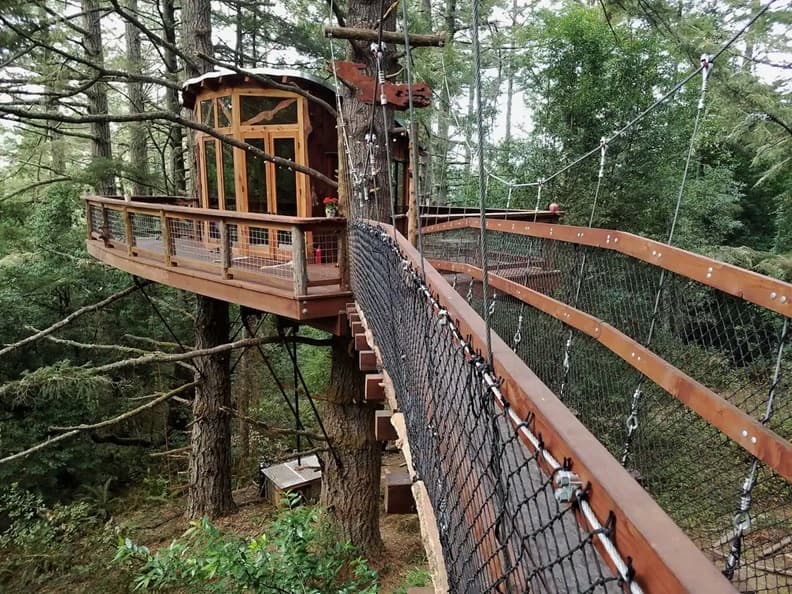
Antony Gibbon designed the Willow Treehouse as a glass box suspended among trees on 34 private acres near Woodstock. In summer, it is a beautiful place to swim in the pond. In winter, it becomes something else entirely. The pond freezes. The trees bare their architecture. And the wood-fired hot tub, which in July is a pleasant amenity, becomes a ritual. You stoke the fire yourself. You wait for the water to climb past one hundred degrees. You lower yourself in while snow falls on the glass roof above you. There is no WiFi here. No cell service. The only light is the fire and whatever the winter sky decides to give you. $295/night, 4.97 rating, 198 reviews.
Southern Illinois, Underground
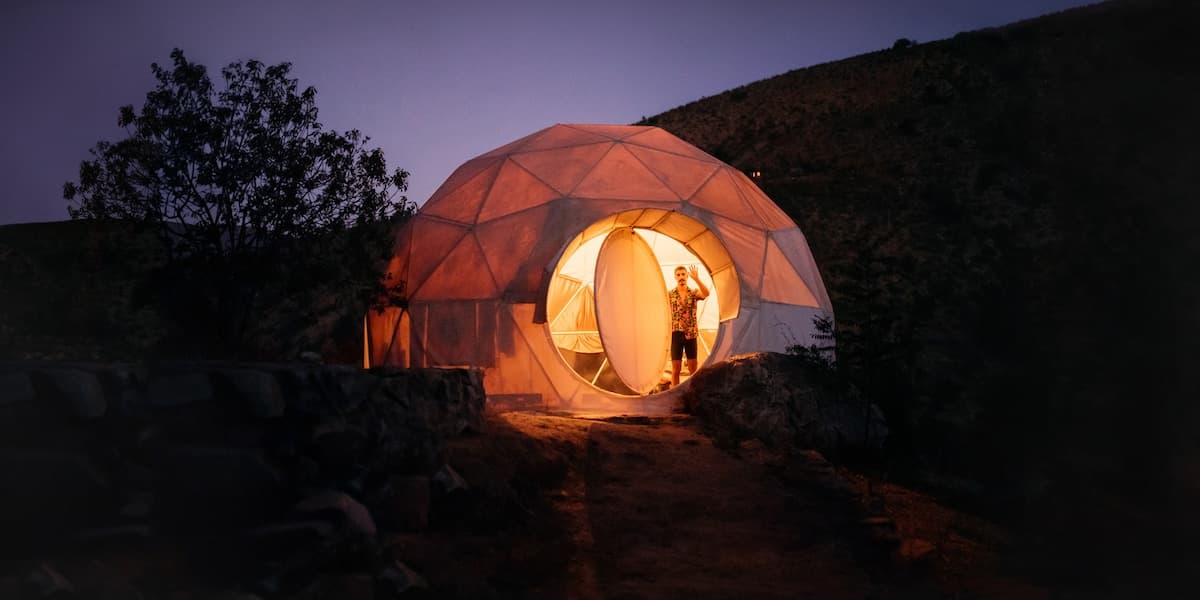
Shawnee National Forest covers 289,000 acres of southern Illinois, a landscape most travelers drive past on their way to somewhere else. The dome sits among tall pines at the forest edge with a six-person hot tub on the deck and fiber internet running through the walls. Five hundred megabits per second in a place where the nearest town has one stoplight. This is the stay for people who want to soak under pine boughs heavy with snow and then stream a movie without buffering. Fire pit, outdoor TV, rainfall shower. The Midwest winters here are long and quiet, and the dome was built for exactly that. $250/night, 4.99 rating, 126 reviews.
Sugarbush Mountain, Mirrored
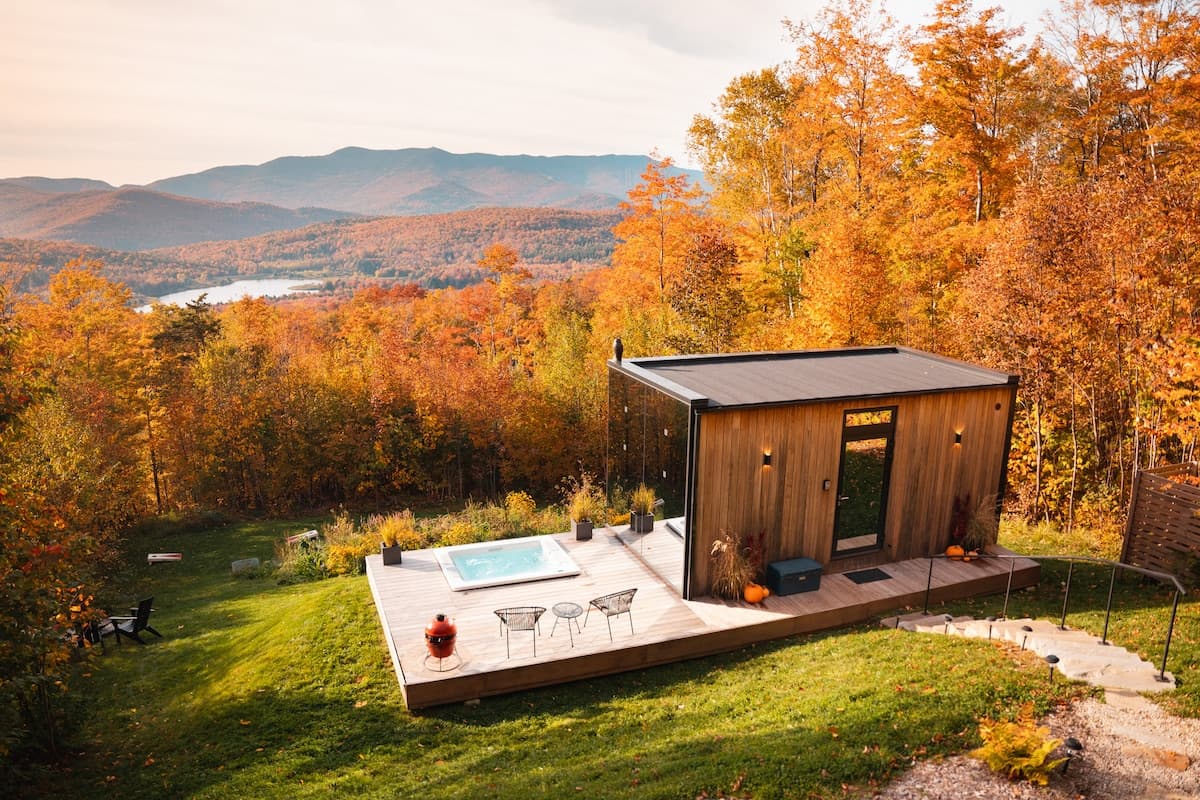
Two hundred square feet of mirrored glass built in Estonia and shipped to Vermont. The most-wishlisted tiny home in the state sits with direct views of Sugarbush Mountain and Blueberry Lake. In winter, the mirrors reflect snow on every surface. You are inside a snow globe, looking out at a snow globe, and the hot tub on the deck is the only thing that makes the math of winter work. The Scandinavian design means clean lines and warm wood. The Vermont winter means you will not want to leave. $325/night, 4.99 rating, 312 reviews.
Michigan North Woods, Stoked by Hand
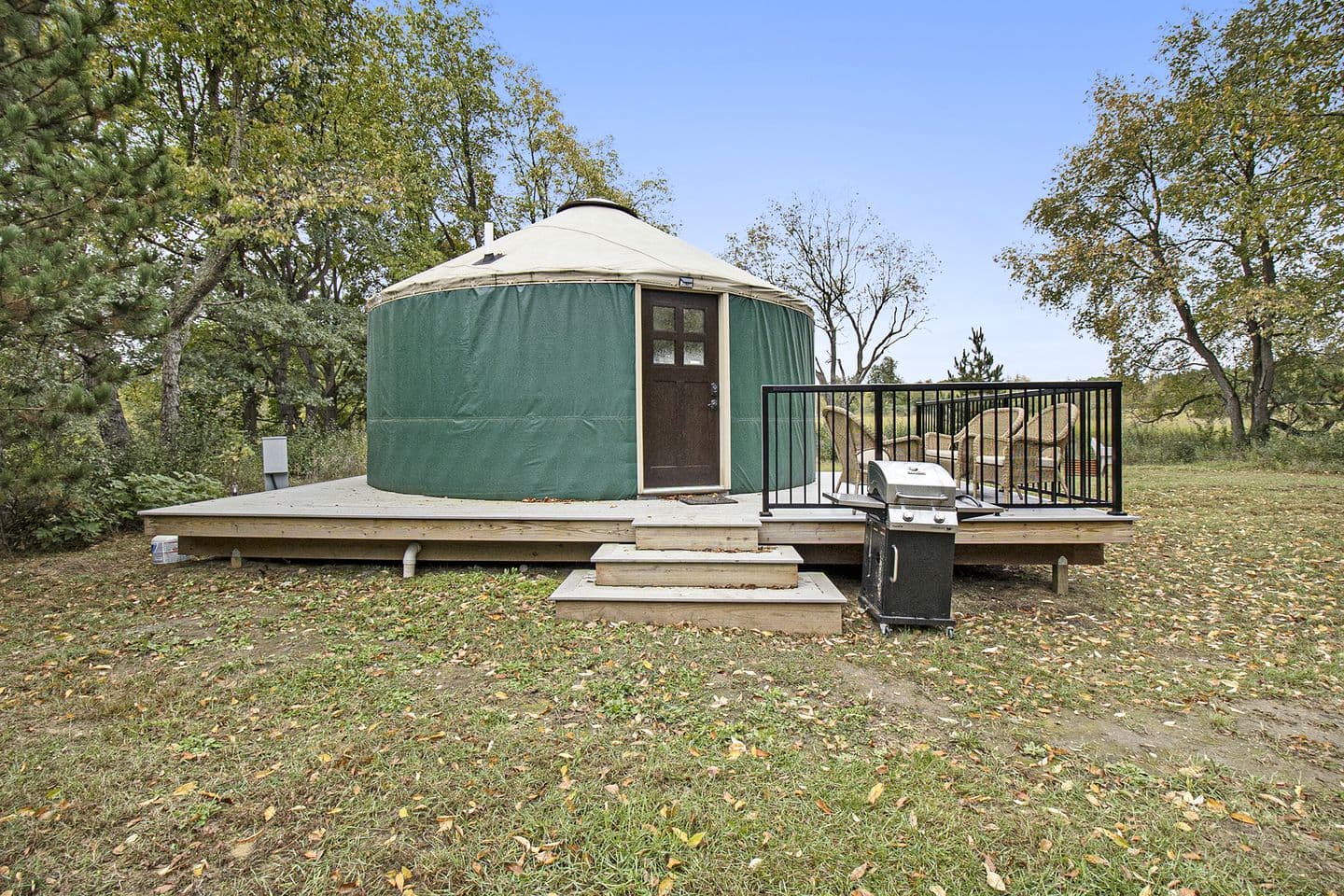
A yurt with a sleeping loft in Michigan upper-lower peninsula, anchored by a wood-fired hot tub you stoke yourself under a sky that gets dark enough to see the Milky Way in January. Big Lake is close. The surrounding wilderness is the kind of pristine that makes you lower your voice without thinking about it. At $185/night, this is the most affordable stay in the collection and the one that most directly connects you to the physical act of winter: chopping wood, feeding a fire, waiting for heat. The yurt itself is spacious enough for four, with two bedrooms and a loft. 4.94 rating, 112 reviews.
Utah Dark Sky, Dual Heat
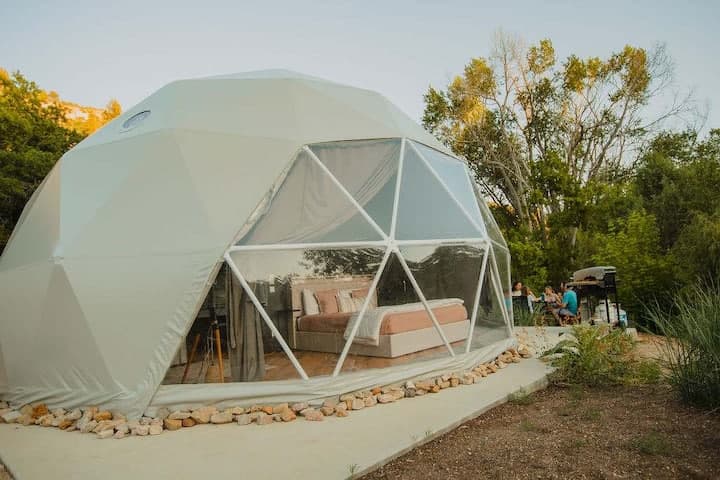
Glendale, Utah, sits in one of the darkest sky corridors in the lower forty-eight. The dome here offers both a private sauna and a hot tub, which means you can move between three temperature zones: the frigid desert air, the wet heat of the tub, and the dry bake of the sauna. Near Zion National Park, the landscape in winter is rust-colored rock against white-capped peaks, and the tourists who fill the canyon in October are gone. The dome was built for stargazing, and winter is when the sky is clearest. $295/night, 4.93 rating, 198 reviews.
Tennessee Forest, Elevated
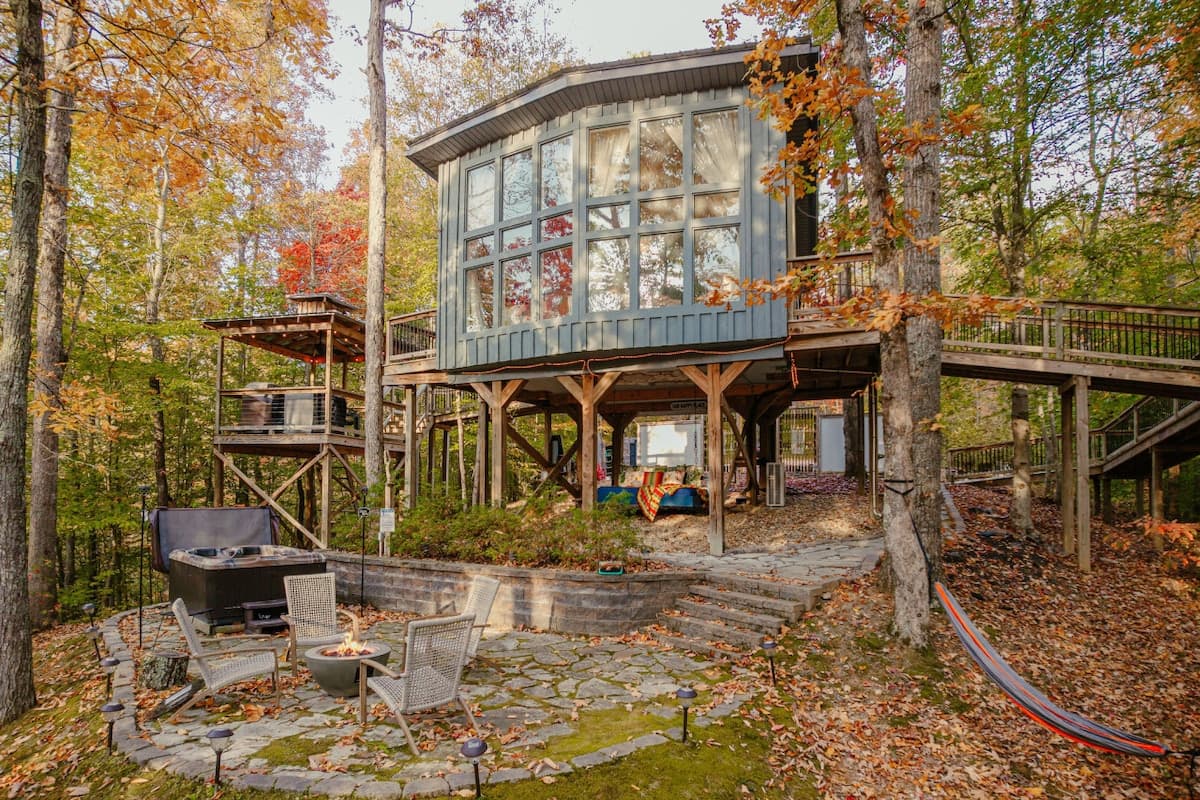
Fifteen feet above the forest floor in Tennessee Upper Cumberland, this treehouse offers a Finnish sauna, a hot tub, and fire pits arranged so that the heat follows you from one zone to the next. One hour from Nashville, fifteen minutes from Cookeville, which means you can drive out on a Friday night and be soaking in the hot tub by eight o clock. The three hundred and eighteen reviews are a signal: this is a stay people return to. The sauna is the differentiator. Most treehouses offer a hot tub. Few offer the full Nordic circuit of hot-cold-rest that makes winter soaking a practice rather than a photo. $380/night, 4.93 rating.
Olympic Peninsula, Bathing Ritual
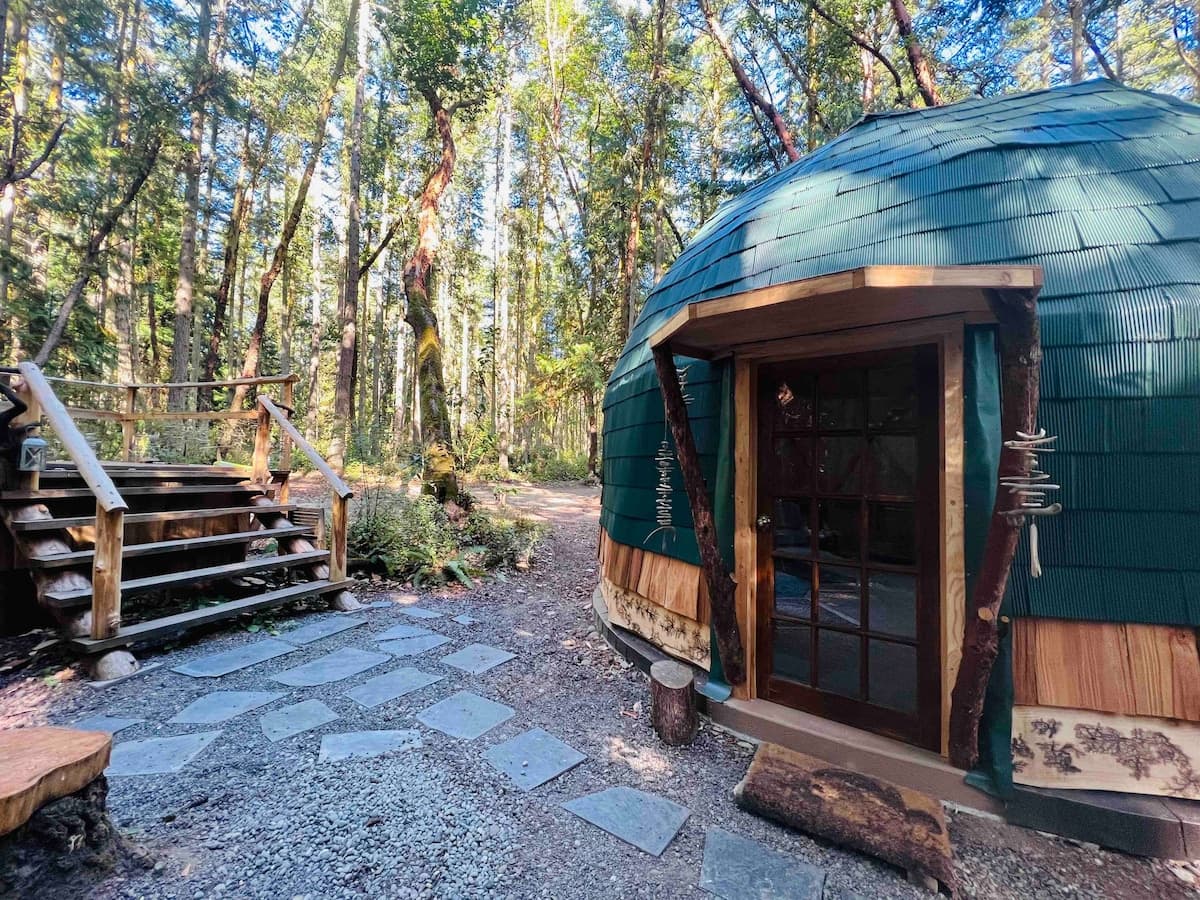
The geodesic dome near Sequim, Washington, was designed around a single idea: the forest sauna as bathing ritual, not amenity. The sauna sits among trees on the Olympic Peninsula, where the winter air is mild by comparison to the rest of this list but wet enough to make dry heat feel like a gift. Dungeness Spit, wildflower meadows, and Pacific wilderness are within reach. The dome itself is off-grid and quiet. At $195/night, this is the second most affordable stay here and the one most committed to the idea that soaking and sweating are the activity, not a recovery from some other activity. 4.96 rating, 67 reviews.
Maine Earth Home, Year-Round
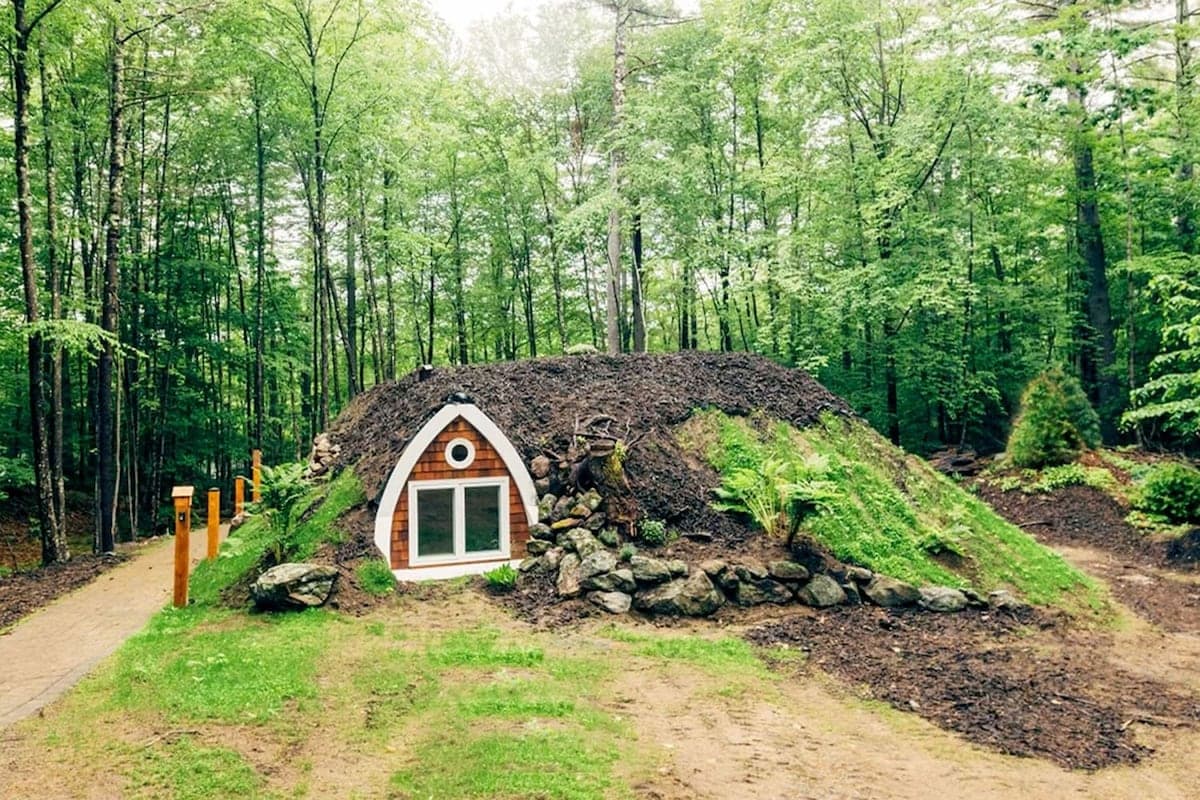
Littlefield Retreat is a fifteen-acre woodland village in southern Maine with treehouses and earth homes scattered around a pond. The hobbit house has a private hot tub, two bedrooms, and heated floors, which in January in Maine is the difference between a novelty and an actual place to sleep. The earth-home construction means the walls absorb the day warmth and release it through the night. Maine in winter is serious about being winter, and this stay is serious about meeting it halfway: the cold is real, the pond freezes solid, and the hot tub is waiting when you come back from a walk through bare birch trees. $285/night, 4.95 rating, 148 reviews.
When to Book
Winter cabin season runs December through March in most of these locations. Vermont and Michigan see peak snow January through February. Southern Illinois and Tennessee are milder but still cold enough for the hot tub to feel essential. Utah dark skies are clearest in winter when the air is driest. Maine coast is windiest in February but also most dramatic.
Book four to six weeks ahead for weekend dates in January and February. Treehouses and domes book faster than traditional cabins in winter because the supply is smaller and the demand for unique winter stays has grown every year since 2020.
For stays that offer both hot tub and sauna (Tennessee, Utah), the advantage is temperature cycling: ten minutes in the sauna, two minutes in the cold air, twenty minutes in the hot tub. Repeat until the world outside the snow globe stops existing.
See also: our guide to unique stays near national forests for properties bordering public land, and October unique stays for the transition month between fall color and first snow. For an introduction to the full spectrum of non-hotel lodging, start with glamping for beginners.
FAQ
What should I pack for a winter cabin with a hot tub?
Swimwear, a robe or heavy towel for the walk between tub and cabin, insulated slippers, and a waterproof phone case if you plan to photograph the steam. Most winter cabins provide outdoor lighting but pack a headlamp for properties without ambient light.
Are outdoor hot tubs safe in freezing temperatures?
Yes, when properly maintained. The water temperature (typically 100-104 degrees) prevents freezing. The risk is the transition between tub and cabin. Properties in this collection have short, lit paths. For wood-fired tubs, the host provides instructions for maintaining temperature.
When is the best time to book a winter cabin?
Four to six weeks ahead for January and February weekends. Holiday weekends (MLK Day, Presidents Day) book earliest. For the best combination of snow and availability, mid-January through early February is the sweet spot in northern states.
Can you use a sauna and hot tub in the same session?
Yes, and many winter travelers do. The Nordic tradition alternates heat and cold: sauna for ten minutes, cold air for one to two minutes, hot tub for fifteen to twenty minutes. Repeat two or three rounds. The Tennessee treehouse and Utah dome in this collection are set up for exactly this cycle.
What is the difference between a wood-fired hot tub and an electric one?
Wood-fired tubs take longer to heat (two to four hours from cold) but maintain higher temperatures and produce a different quality of heat, more even and less mechanical. Electric tubs are ready on demand. Both appear in this collection. The Willow Treehouse in New York and the Michigan yurt both use wood-fired tubs.